Visit Itri
Where Myth Meets History
Three Thousand Years of Legends, Empires and an Unbreakable Spirit
There are places that have witnessed history. And then there are places that have become part of its greatest stories.
Itri is one of them.
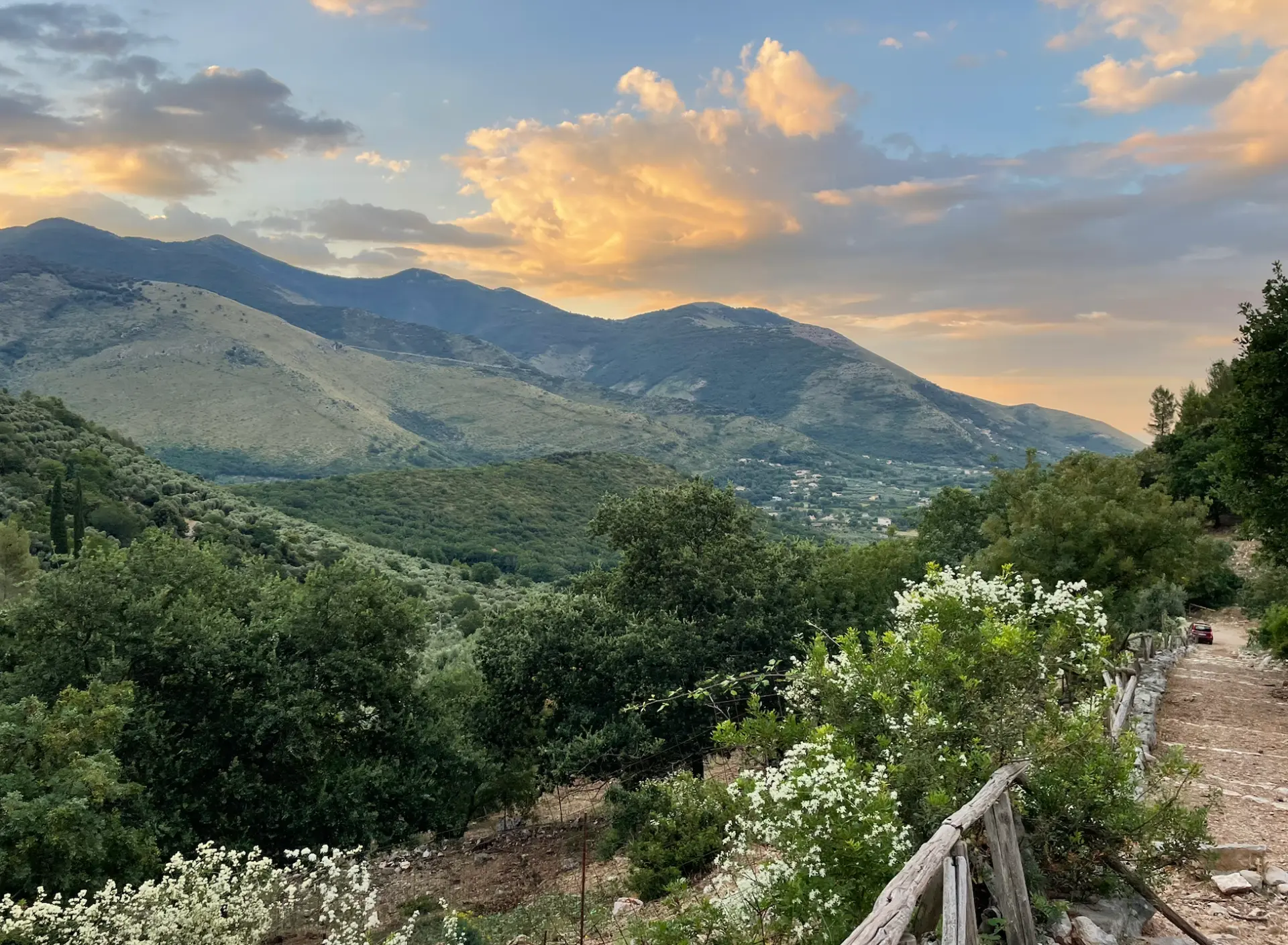
Long before its medieval castle rose above the valley, the mountains and shores of this remarkable corner of Italy were woven into the legends of gods, heroes and ancient civilizations.
The coastline below us is known as the Riviera di Ulisse, the Riviera of Ulysses, named for the hero of Homer's Odyssey. These are the waters associated with the enchantress Circe, the islands of Ponza and Ventotene, and the haunting songs of the Sirens.
In nearby Sperlonga, the Roman Emperor Tiberius built a magnificent seaside villa, where enormous marble sculptures brought the adventures of Ulysses and the Cyclops Polyphemus to life.
And in the hills overlooking Itri, local legend connects the town's ancient origins to the serpent Hydra, slain by Hercules. In 2011, archaeologists uncovered a monumental Roman sanctuary at San Cristoforo, traditionally associated with Hercules and now revealing new secrets about life here more than two thousand years ago.
Mythology, it turns out, is never very far from home.
Ancient Roads and Medieval Towers
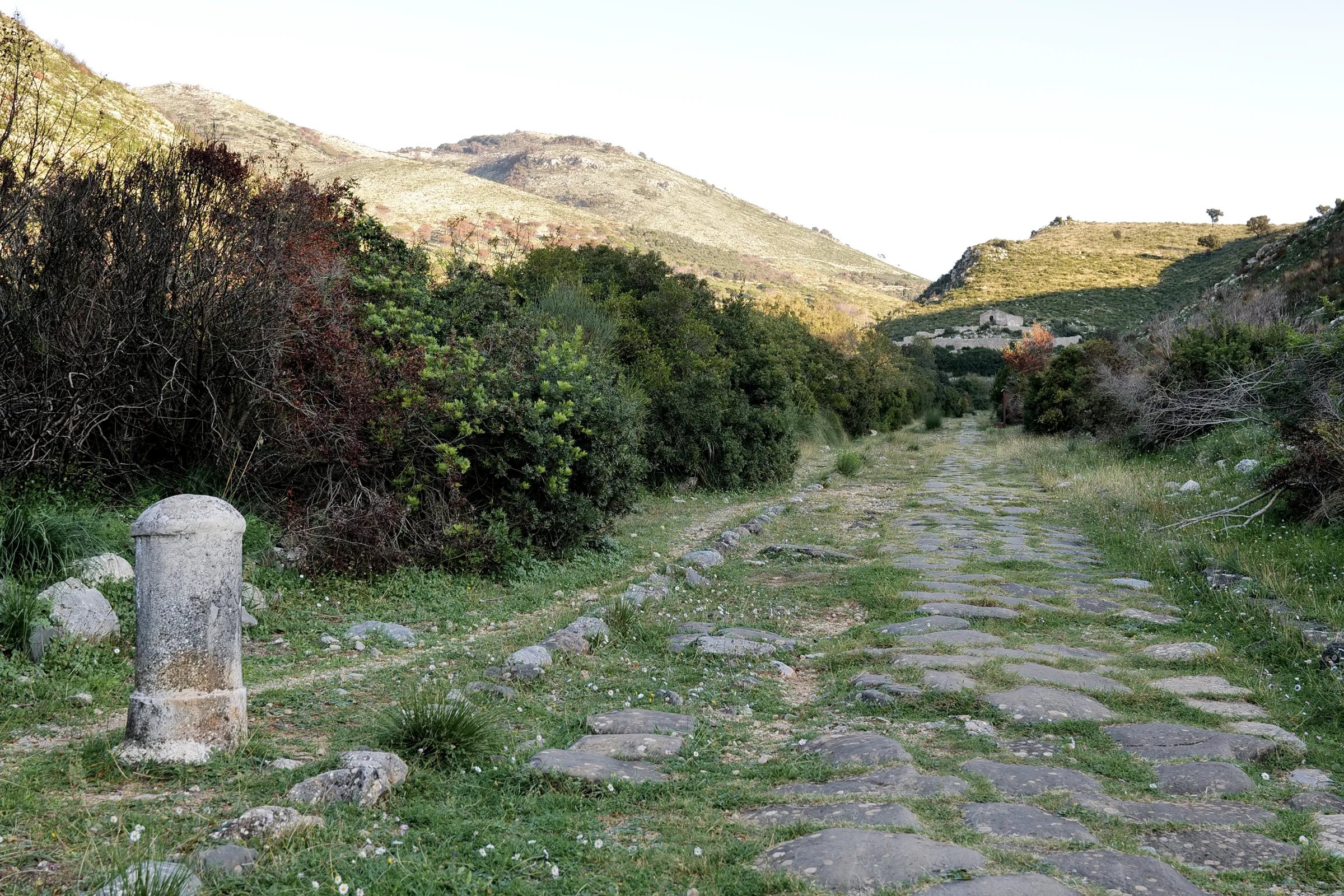
The Romans understood the importance of Itri's location. Their legendary Via Appia, built beginning in 312 BC, passed through the valley, connecting Rome to southern Italy and bringing generations of soldiers, merchants and travellers through these mountains.
Today, you can still walk its original paving stones through the spectacular Gorges of Sant'Andrea, part of the UNESCO World Heritage-listed Appian Way.
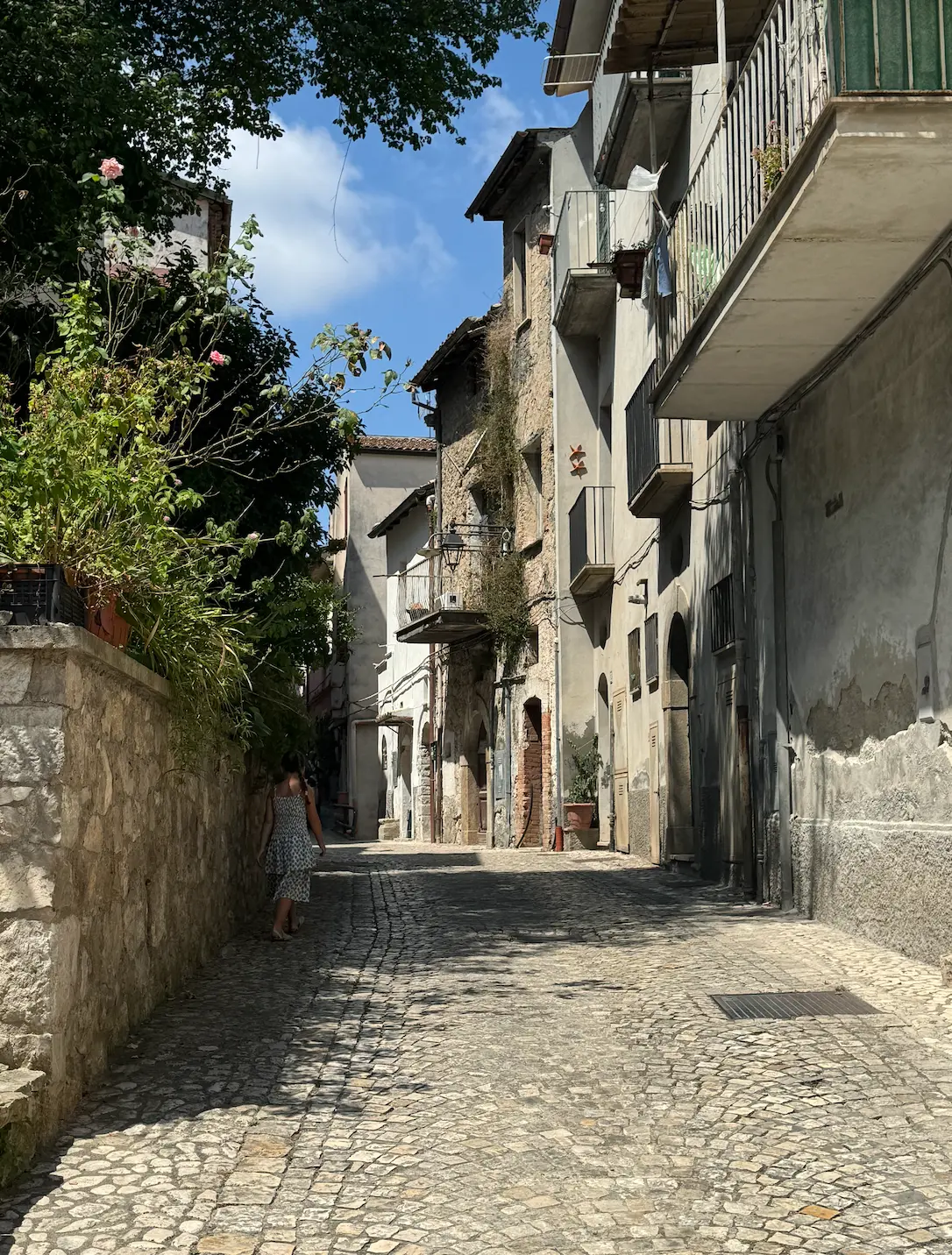
Climb into Itri's medieval heart, and the centuries fold together.
The Medieval Castle, whose earliest tower dates to 882 AD, still watches over the town. Nearby stands the 11th-century Church of San Michele Arcangelo, with its beautiful Romanesque architecture and distinctive bell tower. Then there's the extraordinary 13th-century Moorish-style bell tower of Santa Maria Maggiore, whose intricate arches survived the devastating bombardments of the Second World War.
Sang' de Sierp' — A Little Snake in Our Blood
There's an old expression in Itri: Sang' de sierp'. Snake's blood.
It speaks to something deeply rooted in the people of this village. Proud, passionate, fiercely loyal, stubborn in their convictions and not easily intimidated.
History has given the Itrani plenty of opportunities to prove it.
Even the Western Schism, which divided the Catholic Church for nearly forty years, has an extraordinary connection to Itri. Pope Urban VI, claimed by local tradition as a son of the village, was elected in 1378. His election was fiercely contested by another Itrano, Giacomo da Itri, who helped organize the rival papacy in Avignon. Two figures connected to one small village, caught up in one of the greatest crises in the history of Christianity.
In 1534, the feared Ottoman admiral Barbarossa, on orders from Sultan Suleiman the Magnificent, attacked nearby Fondi in pursuit of the famously beautiful noblewoman Giulia Gonzaga. She fled on horseback to seek refuge in Itri's castle, where the townspeople resisted Barbarossa's forces and sent them retreating.
A year later, Cardinal Ippolito de' Medici, grandson of Lorenzo the Magnificent and a powerful figure in Renaissance politics, died mysteriously in Itri, amid rumours of poisoning.
And in 1771, Itri gave Italy Fra Diavolo, the legendary brigand turned military leader, widely known as Italy's Robin Hood. He fought Napoleon's forces and became immortalized in opera, film and folklore.
Even the great writers came calling.
Charles Dickens travelled through Itri in the nineteenth century, captivated by the extraordinary sight of its medieval houses climbing almost vertically up the hillside. Alexandre Dumas visited, recounting the exploits of Fra Diavolo in his Italian travel writing. Some have even associated Dumas's fictional bandit Luigi Vampa in The Count of Monte Cristo with the legendary outlaw.
But not every chapter of Itri's history belongs to emperors, popes and celebrated figures.
The Second World War brought unimaginable hardship to the people of Itri. As some of the fiercest fighting of the Italian campaign raged through southern Lazio in 1943 and 1944, the village found itself caught between occupying German forces and the advancing Allies. Families fled into the mountains, seeking refuge in forests, rural shelters and even the Sanctuary of the Madonna della Civita. Bombardments and reprisals took civilian lives, and in May 1944, the fighting reached the village streets. By the time Itri was liberated on May 19, 1944, nearly 75% of the town lay in ruins. But its people endured. Those who fought, those who protected their families, those who survived the destruction and those who returned to rebuild their homes and their lives. Their courage and sacrifice were formally recognized in 1961, when Itri was awarded Italy's Bronze Medal for Civil Valour.
The suffering of this region would later reach audiences around the world through La Ciociara (Two Women), the 1960 film directed by Vittorio De Sica, based on the novel by Alberto Moravia. Starring Sophia Loren, the film tells the harrowing story of a mother and daughter seeking refuge from the war, only to encounter its most devastating brutality, including the sexual violence inflicted on women and girls during the Italian campaign. Parts of the film were shot right here in Itri. Its war-scarred streets became the backdrop for scenes of devastation, and Sophia Loren and Jean-Paul Belmondo filmed in the village's historic lanes. Loren's extraordinary performance earned her the 1962 Academy Award for Best Actress, bringing international attention to a story rooted in the suffering and resilience of the people of southern Lazio.
The village we walk through today stands because of the generations who endured those years. Its restored streets and surviving ancient stones are reminders not only of what was lost, but of those who refused to let their community disappear. Through centuries of conflict, upheaval and rebuilding, the Itrani have held on to something even more enduring: their independence, traditions and fierce loyalty to one another.
Sang' de sierp'. A little fire in the blood. A lot of heart. And a village you should never underestimate.
The Madonna della Civita: A Mountain of Faith
High above Itri, surrounded by the green peaks of the Aurunci Mountains, stands the Santuario della Madonna della Civita, a place of pilgrimage for centuries.
Legend tells of a shepherd who discovered an image of the Virgin Mary resting in a holm oak tree and miraculously regained his hearing and speech.
The devotion continues today in one of Itri's most moving traditions.
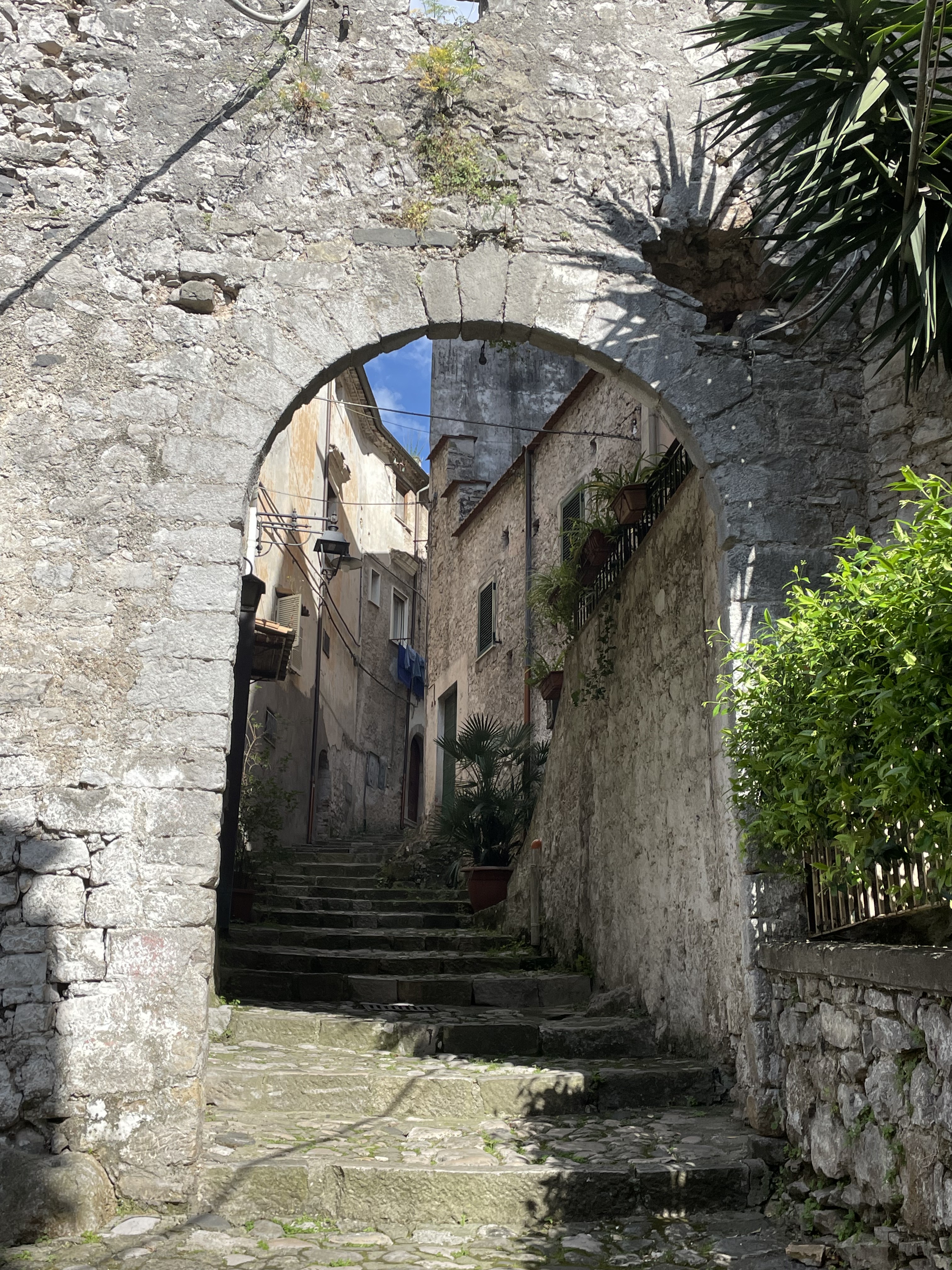
For seven Saturdays leading up to the July feast of the Madonna della Civita, pilgrims set out in the early morning to climb the mountain on foot. Following ancient stone paths through olive groves, fragrant Mediterranean vegetation and shaded forests, generations of Itrani make the journey to honour the Madonna. It is a beautiful expression of faith, family and belonging, passed from one generation to the next.
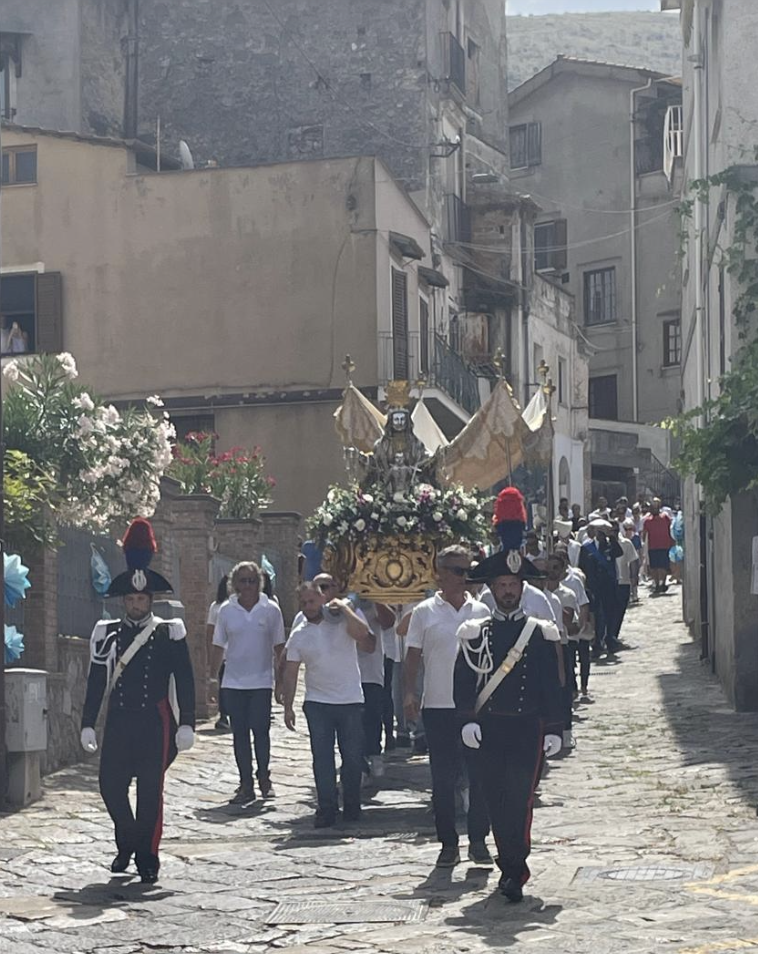
A Village That Loves to Celebrate
When to Visit Itri
If there's one thing the Itrani know how to do, it's bring everyone together.
Especially in summer, when it seems that almost every week brings another festa: neighbourhood celebrations, music in the piazzas, food shared at long tables, and streets filled with families and friends late into the night.
Some of our favourite moments of the year:
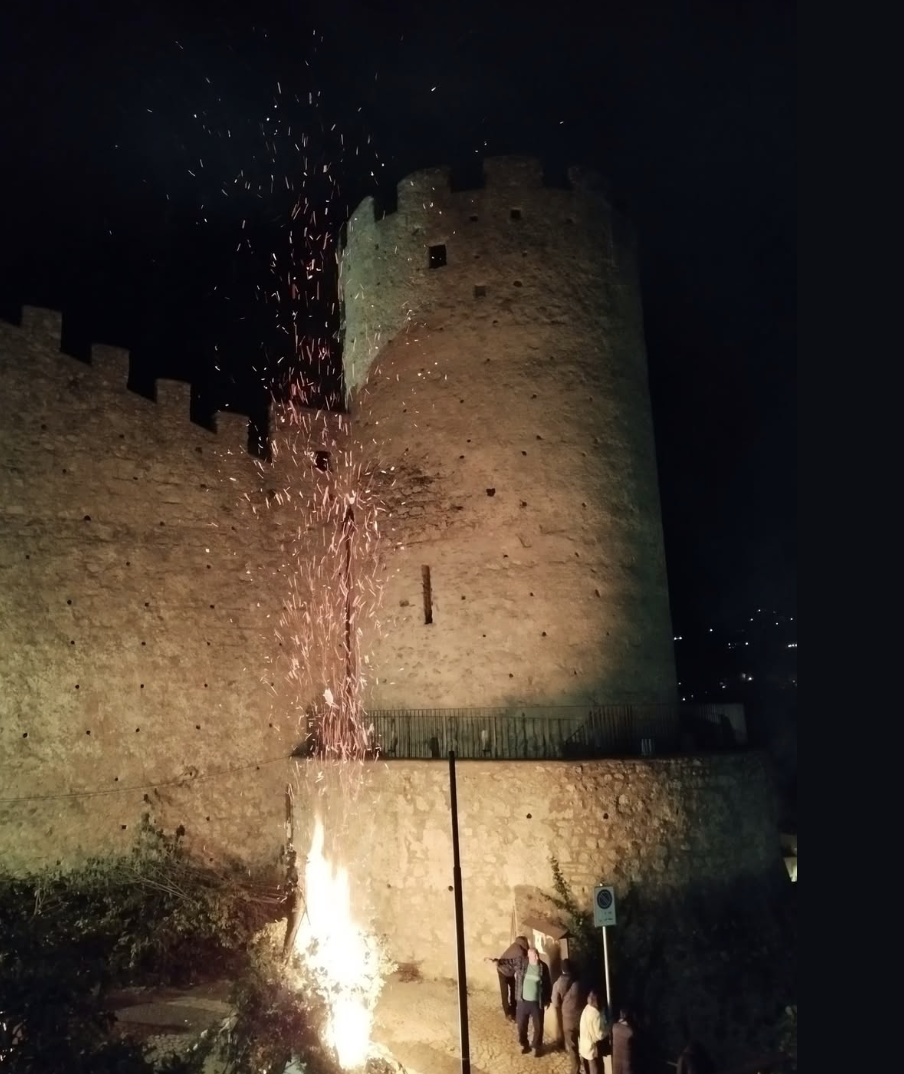
March 19 — I Fuochi di San Giuseppe
On the Feast of St Joseph, enormous bonfires light up neighbourhoods across Itri. Families gather around the flames with traditional food, wine and folk music, celebrating the arrival of spring in one of the village's oldest and most beloved traditions.
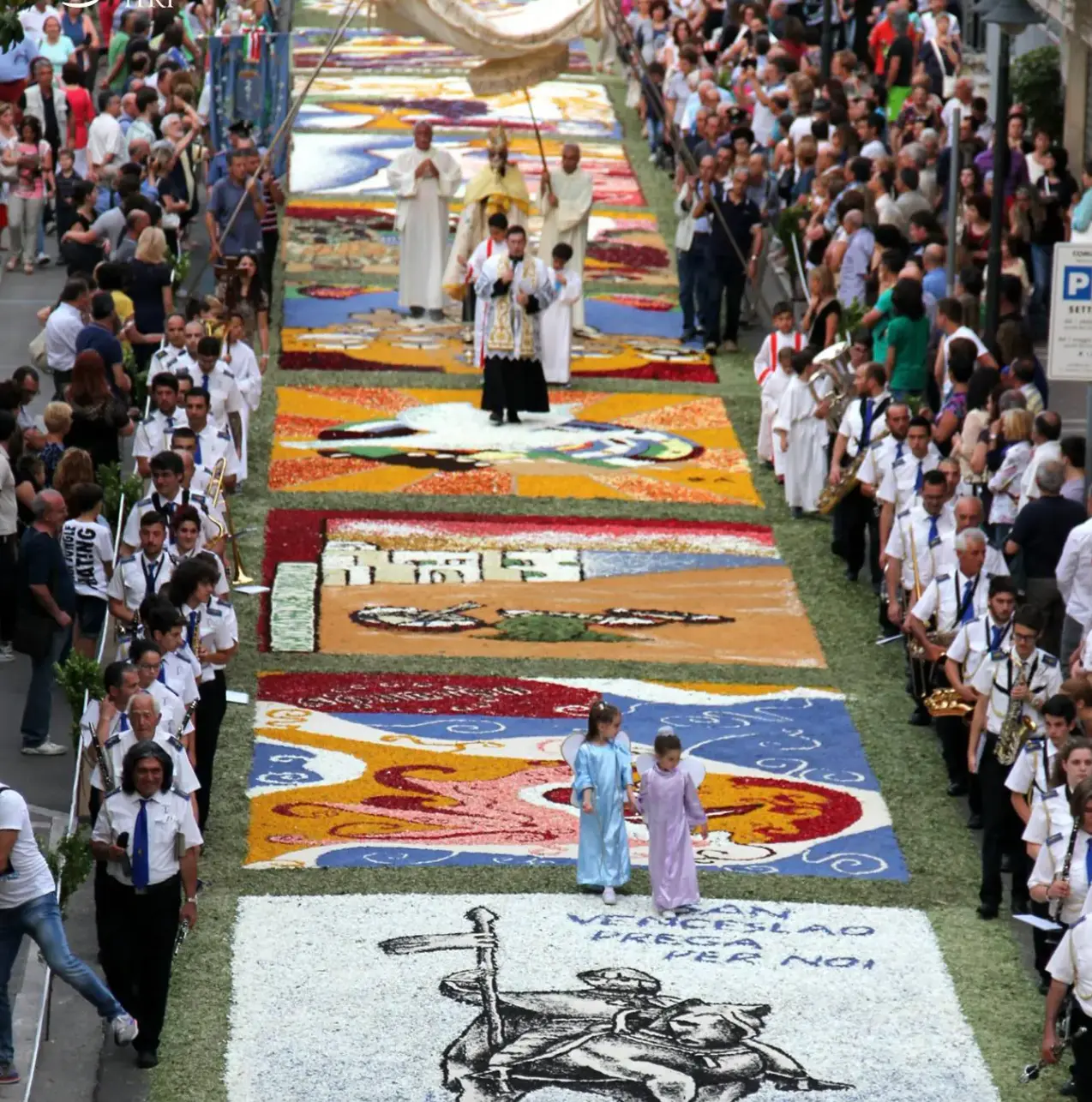
May – June — L'Infiorata
For Corpus Domini, the streets become works of art. Entire carpets of intricate designs are created by hand from thousands of flower petals, transforming the village into a colourful celebration of creativity, devotion and community.
July 21 — La Festa della Madonna della Civita
Perhaps Itri's most heartfelt celebration. Following weeks of pilgrimage, the village comes alive with religious processions, lights, music and festivities honouring its beloved Madonna. It's a time when families come home, generations reunite and the entire community celebrates together.
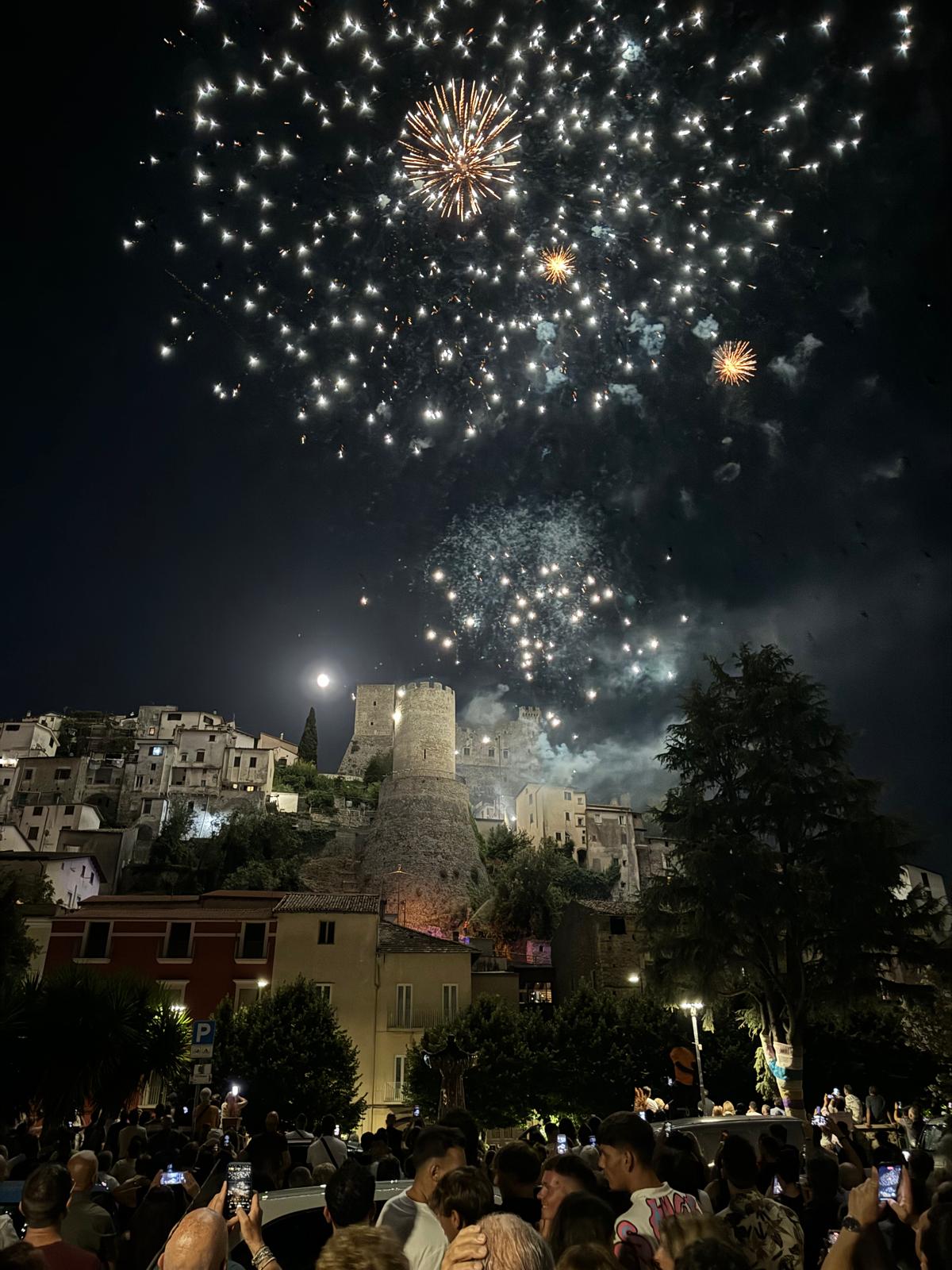
July, August and Beyond — Summer in the Piazza
Throughout the summer, Itri fills with concerts, local food festivals, outdoor performances and neighbourhood celebrations. One evening might bring a traditional brass band, another a feast of local specialities, and another dancing under the stars.
The celebrations change from year to year, but the spirit remains the same.
Come for the history. Stay for the people.
Because in Itri, the best way to understand the village is to become part of it.